

Think about the last time you contacted customer support.
Maybe a delivery was late. Maybe something you ordered didn’t work. Maybe you were trying to solve a billing issue.
In that moment, you probably wanted two things: a solution—and someone who actually listened.
Customers don’t reach out to support just to get answers. They want to know their concern matters. They want reassurance that someone on the other side understands the problem and is working to fix it.
That feeling—being heard—is often what determines whether a customer walks away frustrated or confident in the brand.
Companies spend a lot of time measuring response times, ticket volumes, and resolution rates. Those metrics are important. But they only tell part of the story.
What customers remember most is how the interaction made them feel.
When support teams listen carefully, acknowledge the issue, and communicate clearly, trust starts to build—even if the problem takes time to solve.
That’s something we’ve seen repeatedly at World Class Contact Centers (WCCC).
After more than 30 years in the contact center industry, one thing has become clear: great customer support isn’t just about solving problems. It’s about creating conversations that build trust.

Why Feeling Heard Matters in Customer Experience
Every customer interaction carries emotional weight.
When something goes wrong—a late shipment, a technical issue, an unexpected charge—customers aren’t just looking for information. They’re looking for reassurance that the company takes their concern seriously.
If they feel ignored or rushed through the conversation, frustration grows quickly.
But when a support agent listens, asks the right questions, and responds thoughtfully, the tone of the entire interaction changes.
The same problem that could have damaged the relationship becomes an opportunity to strengthen it.
Customers remember those moments.
They remember when someone took the time to understand the issue instead of pushing them through a script.
And over time, those experiences shape how they view the brand.
Businesses that consistently deliver thoughtful support build stronger customer relationships—and often stronger reputations as well.
The Psychology Behind Feeling Heard in Customer Service
Feeling heard isn’t just a customer service buzzword. There’s real psychology behind it.
When people feel acknowledged during a conversation, their stress levels drop and they become more open to solutions. When they feel dismissed, the opposite happens—the problem feels bigger and the conversation becomes more difficult.
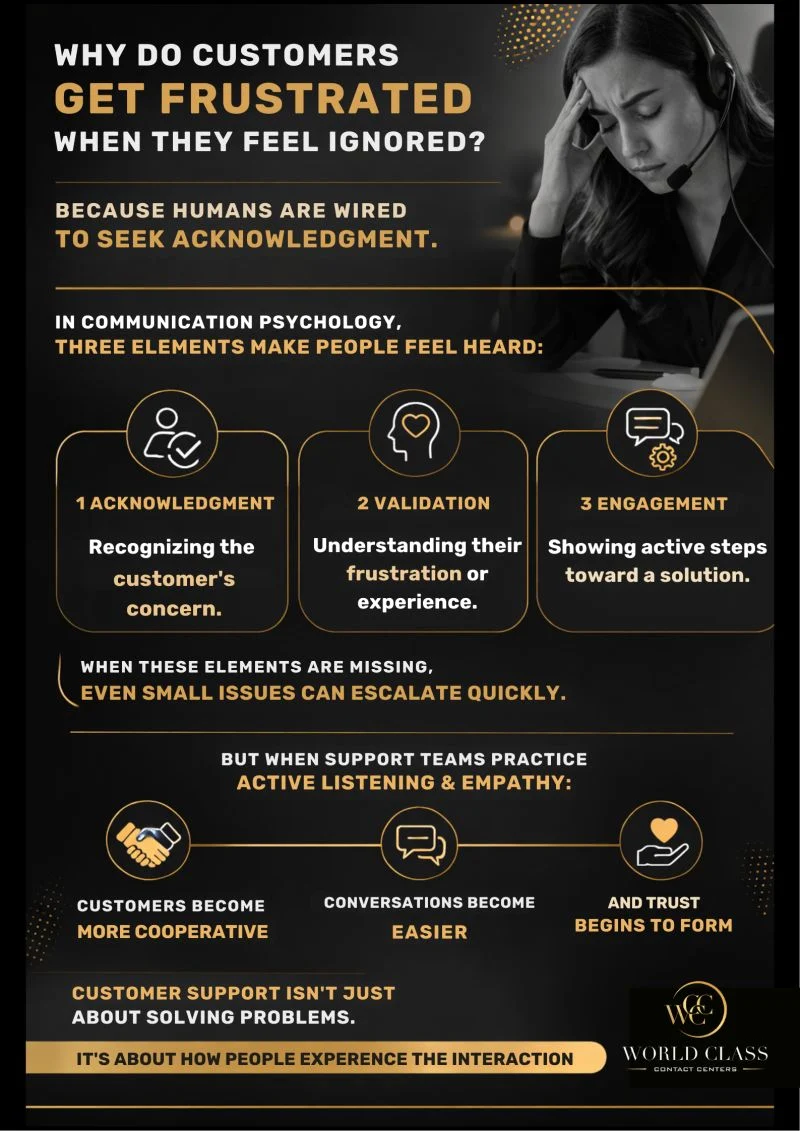
In customer support, three simple behaviors make the biggest difference.
Acknowledge the Issue
The first step is surprisingly simple: show the customer that you understand the problem.
Repeating or summarizing the issue lets the customer know you were actually listening. It may seem small, but it changes the tone of the conversation immediately.
Without that acknowledgment, customers often feel like they’re starting the conversation from scratch every time they explain the problem.
Recognize the Customer’s Experience
Validation doesn’t mean agreeing with every complaint. It simply means recognizing the customer’s perspective.
Something as simple as acknowledging that a situation is frustrating can calm the conversation and make the customer feel understood.
That moment of empathy often turns a tense interaction into a collaborative one.
Show That Action Is Being Taken
Customers also want to know that someone is actively working on the problem.
Clear next steps, updates, and realistic timelines reassure the customer that their concern isn’t disappearing into a system somewhere.
When these three elements come together—acknowledgment, empathy, and action—customers feel heard.
And once that happens, trust starts to grow.
How Customer Support Shapes Brand Trust
For many customers, support teams are the only real interaction they ever have with a company.
They may never meet the product team, speak to leadership, or interact with the people behind the brand. But they will remember the person who helped them when something went wrong.
That’s why support conversations carry so much weight.
A single thoughtful interaction can strengthen the relationship between a customer and a brand. On the other hand, a dismissive or rushed response can undo years of goodwill in minutes.
Trust doesn’t come from marketing messages alone. It’s built in everyday conversations—especially when customers need help.
When people consistently experience patient, helpful support, they begin to associate the brand with reliability. They feel confident reaching out again because they know someone will actually listen.
Over time, that trust becomes one of the company’s most valuable assets.
The Hidden Cost of Customers Who Don’t Feel Heard
When customers feel ignored, the consequences usually go beyond the immediate issue.
In many cases, they simply stop doing business with the company.
Rarely do they send a long explanation about why they left. They just move on to another brand that makes the process easier.
Others take their frustration online. Reviews, social media posts, and word-of-mouth conversations can spread quickly—and those experiences often influence potential customers researching the brand.
There’s also a quieter cost inside the business itself.
When support teams misunderstand the issue or rush through the conversation, customers often have to contact support multiple times to resolve the same problem. This creates longer queues, higher operational costs, and unnecessary strain on support teams.
But when customers feel heard early in the interaction, the opposite tends to happen.
Issues are resolved faster. Conversations become more productive. And the relationship with the customer remains intact.
That’s why strong support operations aren’t just about efficiency—they’re about protecting the customer relationship.
What Makes Customers Feel Heard
Making customers feel heard isn’t complicated, but it does require the right habits and the right training.
The most effective support teams tend to focus on a few key behaviors.
Listening Before Solving
It’s tempting to jump straight into problem-solving mode, especially when support teams are working through a queue of requests.
But customers often need a moment to fully explain the issue before a solution can make sense.
Support professionals who pause, listen carefully, and ask clarifying questions usually reach the right solution faster—because they understand the situation from the start.
Communicating with Empathy
Empathy is one of the most underrated skills in customer support.
Customers want to know that the person helping them understands the inconvenience they’re experiencing. A brief acknowledgment of that frustration can completely shift the tone of the conversation.
It reminds the customer that they’re not just talking to a system—they’re talking to someone who cares about resolving the issue.
Taking Ownership
Few things frustrate customers more than feeling passed from one department to another.
Clear ownership changes that experience. When support agents communicate that they are responsible for helping resolve the issue—and keep the customer updated—confidence in the process grows.
Customers don’t expect perfection. But they do expect accountability.
Balancing Speed and Understanding
Speed matters in customer service. Long wait times can quickly erode patience.
But speed without understanding often creates more problems than it solves.
The best support teams find a balance. They respond quickly while still giving the customer enough attention to fully understand the situation.
That balance is where great customer experiences happen.
Technology and the Human Side of Support
Technology has transformed the way companies handle customer support.
Automation, chatbots, and AI-driven tools allow businesses to respond quickly and manage large volumes of requests. For routine questions—like tracking orders or updating account information—these systems can save both customers and support teams valuable time.
But technology alone can’t create the feeling of being heard.
Empathy, intuition, and emotional awareness are still deeply human skills.
That’s why the most effective customer support strategies combine automation with skilled support professionals. Technology handles repetitive tasks and speeds up the process, while human agents focus on conversations that require judgment, patience, and understanding.
When those two elements work together, companies can deliver support that is both efficient and meaningful.
How World Class Contact Centers Helps Businesses Deliver Better Support
At World Class Contact Centers (WCCC), customer support is viewed as far more than an operational function. It’s a critical part of how businesses build and maintain customer trust.
With more than three decades of experience in the contact center industry, WCCC has worked with organizations across industries to improve the way they connect with their customers.
That experience has shaped an approach focused on both operational excellence and meaningful customer interactions.
Decades of Contact Center Expertise
Over the years, customer expectations have changed dramatically.
What hasn’t changed is the importance of clear communication and thoughtful support.
WCCC’s long history in the BPO industry provides insight into what works—and what doesn’t—when it comes to delivering consistent customer experiences.
By benchmarking industry best practices and adapting to evolving customer needs, WCCC helps organizations build support systems that customers can rely on.
Process Optimization
Behind every successful support team is a well-designed process.
WCCC works closely with businesses to identify inefficiencies, streamline workflows, and improve how support requests are handled from start to finish.
When support operations run smoothly behind the scenes, agents can focus on what matters most: helping customers.
24/7 Multilingual Support
In a global marketplace, customers expect assistance whenever they need it—and in the language they’re most comfortable speaking.
WCCC provides 24/7 multilingual support, allowing businesses to communicate clearly with diverse customer bases across different regions and time zones.
When language barriers disappear, conversations become smoother and misunderstandings become far less common.
Turning Support into a Competitive Advantage
Many companies see customer support as a necessary cost of doing business.
But when done well, it becomes something much more powerful.
Organizations that invest in strong support teams often discover that customer service becomes a key differentiator. Customers stay longer, recommend the brand more often, and trust the company even when problems arise.
That’s the kind of long-term relationship every brand wants to build.
Practical Ways Businesses Can Improve Customer Support Today
Creating better support experiences doesn’t always require major changes. In many cases, small improvements in communication and training can make a noticeable difference.
Start with the fundamentals.
Train support teams to listen carefully before offering solutions. Encourage empathy in customer conversations. Make sure agents have the tools and authority they need to resolve issues efficiently.
Customer feedback can also be a powerful guide. When businesses regularly review customer interactions and satisfaction scores, patterns begin to emerge. Those insights often reveal opportunities to improve both communication and processes.
Over time, these changes help create a support culture where listening is just as important as solving the problem.
The Future of Customer Support
Customer expectations continue to evolve.
Today’s customers want support that is fast, accessible, and personalized. They expect companies to respond quickly and communicate clearly across multiple channels.
Technology will continue to play an important role in meeting those expectations. Automation and artificial intelligence will help organizations handle higher volumes of customer interactions while maintaining efficiency.
But no matter how advanced these systems become, one fundamental expectation will remain the same.
Customers want to feel heard.
Businesses that combine modern technology with thoughtful human support will be best positioned to meet that expectation—and build lasting relationships with their customers.
Listening Is the Foundation of Brand Trust
Behind every support request is a person looking for help.
Sometimes the issue is simple. Other times it’s frustrating, confusing, or time-sensitive.
But in every case, the customer wants to know that someone is listening.
When customers feel heard, problems become easier to resolve and relationships grow stronger. When they don’t, even small issues can damage trust.
That’s why support conversations matter so much.
At World Class Contact Centers, the goal goes beyond answering calls or closing tickets.
The goal is to create meaningful conversations that strengthen the connection between businesses and their customers.
Because when customers feel heard, trust grows.
And when trust grows, businesses thrive.
Ready to Strengthen Your Customer Support Strategy?
Customer support plays a critical role in shaping how customers view your brand.
With the right systems, training, and support team in place, every interaction becomes an opportunity to strengthen trust and improve the overall customer experience.
At World Class Contact Centers, we help businesses build scalable support operations that combine efficiency with genuine customer care.
Our services include:
- 24/7 multilingual customer support
- inbound and outbound contact center services
- process optimization and operational benchmarking
- scalable BPO support solutions
If your organization is looking to improve customer experience while optimizing support operations, the right strategy can make all the difference.
Connect with World Class Contact Centers to learn how we can help you deliver support experiences that build lasting customer trust. worldclasscc.com